What Economic Ownership Actually Means
It is the phrase behind everything AtomAfrica builds, so it deserves a plain answer. What separates truly owning something from being able to prove it, why ownership is a journey rather than a switch, and what a verified stake changes for owners, developers, and lenders.
Somewhere in Lagos, there is a drawer. Inside it: a folded allocation letter, a stack of payment receipts, and a photocopy of a survey plan. Together, those papers represent years of discipline and one of the largest investments their owner will ever make.
Ask him if he owns that land and he will say yes, without hesitation. Ask his bank the same question and the answer gets complicated. Ask a stranger to verify it, and the drawer is suddenly not enough.
That gap, between what people truly own and what anyone else can confidently confirm, is the problem economic ownership exists to close. It is a term we use constantly at AtomAfrica, so it deserves a plain answer: what does it actually mean?
A working definition
Economic ownership is a trusted, traceable digital record of a person's stake in a real‑world asset.
Every word in that sentence is doing work.
A stake, because ownership in the real world is rarely all or nothing. It grows. Someone paying for a plot in installments owns more of it this month than last month.
A record, because ownership that lives only in memory, in a drawer, or in one company's spreadsheet cannot travel. It cannot be checked, referenced, or built upon.
Traceable, because a record you cannot follow backwards is just a claim. Economic ownership carries its history: when each payment was made, how the stake grew, what changed and when.
Trusted, because a record is only as good as its verification. On AtomAfrica infrastructure, qualifying assets and networks are held to common Trust Standards, which can cover documentation, professional legal verification, ownership rights, valuation, attestations, and encumbrance records, with qualified independent professionals such as lawyers, surveyors, and valuers involved where applicable.
Put together: not just owning something, but owning it in a form the wider world, including the financial system, can see and evaluate.
Ownership as a journey, not a moment
Traditional thinking treats ownership as a switch. You own 0% of a property, then one day, after full payment and paperwork, you own 100%.
Real life rarely works that way here. Across Nigeria, people build ownership gradually: a contribution this month, another after the next harvest or the next contract. The commitment is real from the first payment. The problem is that the recordof it usually is not.
Economic ownership treats that journey as legitimate and worth documenting from day one. On NairaPacket, AtomAfrica's owned distribution network and the first implementation of this model, customers begin building recorded property ownership from as little as ₦10,000. Each payment updates a verified ledger. Nobody waits until completion for their stake to exist on paper, because their stake exists in the record the entire time.
That single shift, recording the journey instead of only the destination, is what makes progressive ownership financially meaningful rather than financially invisible.
What economic ownership is not
Because the idea sits near several buzzwords, it is worth drawing some lines.
It is not a replacement for legal title. Deeds, governor's consent, and statutory registration remain what they are. Economic ownership is a complementary record layer: it documents and verifies stakes, transactions, and history in a form designed to work with legal processes, not around them.
It is not cryptocurrency or speculative tokenization. There is no coin, no trading pair, no promise of overnight appreciation. There is a ledger, trust standards, and real assets with real documentation.
It is not a guarantee of financing. A verified stake makes ownership evaluable; it does not make any particular loan approvable. Participating financial institutions independently decide eligibility, amounts, pricing, and terms. What economic ownership removes is the reason most requests never received a fair evaluation at all.
Why it changes the picture for everyone
For the owner, economic ownership turns quiet discipline into visible proof. A stake with a verified record can be shown, referenced, and, where it qualifies, evaluated for credit. Years of payments stop being a private story and become a documented position.
For property businesses, it changes what they sell. A developer whose customers hold verified, traceable stakes is offering something more valuable than a receipt: ownership with financial utility attached. That is a reason to buy from them rather than from anyone whose paperwork ends at a stamped letter.
For financial institutions, it converts an invisible asset class into an evaluable one. Lenders do not need to take anyone's word for what a customer owns; they can review the record, the verification behind it, and the encumbrance status, then apply their own judgment.
None of these parties changes what they do. The owner still owns, the developer still develops, the bank still decides. Economic ownership simply lets each of them see what the others hold.
The bigger picture
Nigeria's numbers make the stakes clear. Over 90% of land is estimated to be unregistered or untitled. An estimated $300 billion or more sits as dead capital in undocumented property. Only about 6% of adults access formal credit, despite far broader financial inclusion.
Those statistics are usually read as a story about poverty. They are better read as a story about invisibility. The wealth exists. The discipline exists. What has been missing is the layer that records, verifies, and connects it.
That layer is what we mean by economic ownership. And once ownership becomes visible, everything downstream, from fairer credit evaluation to stronger property markets, becomes possible.
If you want to see what happens next in the chain, read our earlier post, How Asset‑Linked Credit Works, which follows a verified stake all the way through a loan and back.
AtomAfrica builds the infrastructure connecting financial institutions to economic ownership: AtomBank, AtomOwn, and AtomCredit, proven through NairaPacket. To learn more or partner with us, visit atomafrica.tech.
More on Economic Ownership
 Economic Ownership
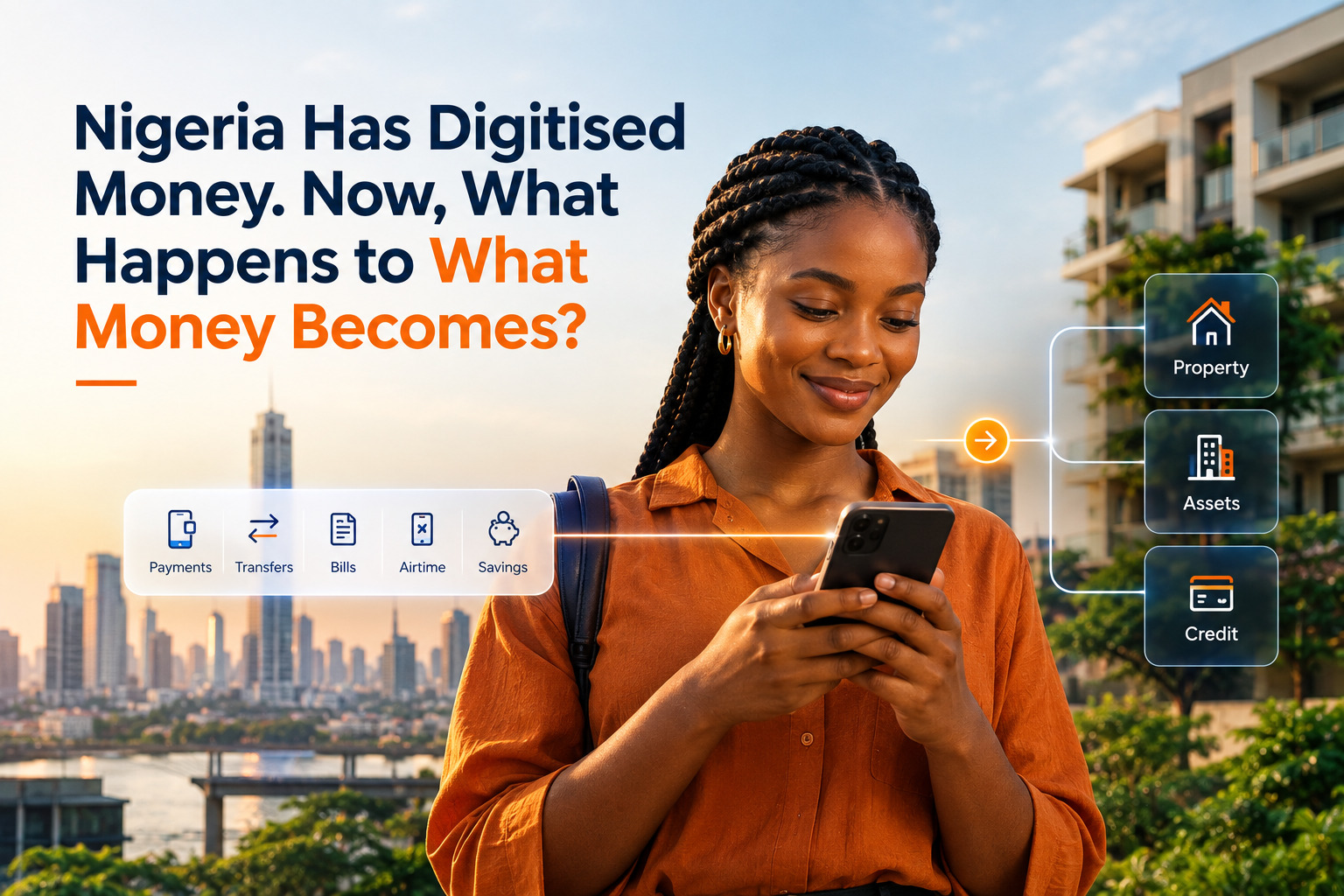
 Nigeria Has Digitised Money. Now, What Happens to What Money Becomes?
Nigeria has built powerful digital rails for moving money, with fintech apps now reaching most smartphone users. The next opportunity is connecting those financial rails to what people own: property, assets and eventually access to credit.
 Economic Ownership
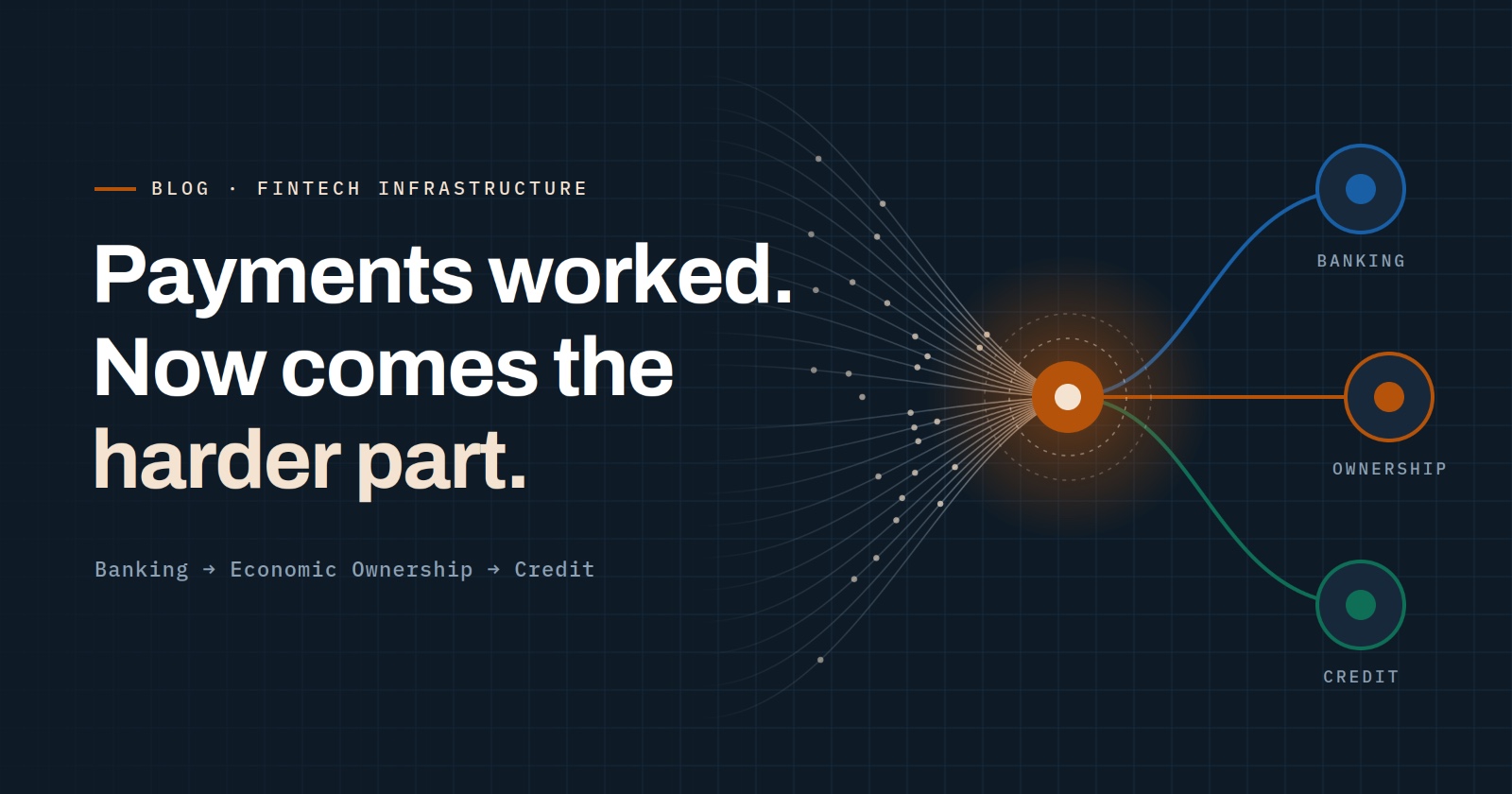
 Payments Worked. Now What? Fintech as Economic Infrastructure | AtomAfrica
AtomAfrica founder Oladipupo Muideen Olaide on why Nigerian fintech must move beyond payments, and what it takes to turn transactions into ownership and credit.
 Economic Ownership
 Diaspora Property Ownership Nigeria 2026: How Nigerians Abroad Can Own Property Back Home
For Nigerians abroad, owning property back home doesn't always have to start with millions. Explore practical routes to diaspora property ownership in Nigeria in 2026, including mortgages, payment plans, joint ownership and progressive property ownership.