Diaspora Property Ownership Nigeria 2026: How Nigerians Abroad Can Own Property Back Home
For Nigerians abroad, owning property back home doesn't always have to start with millions. Explore practical routes to diaspora property ownership in Nigeria in 2026, including mortgages, payment plans, joint ownership and progressive property ownership.
You live in London.
You work in Toronto.
You are building your career in Houston.
You may have spent the last few years trying to settle into life abroad — paying rent, sending money home, supporting family, paying bills and, hopefully, putting something aside for yourself.
But somehow, whenever you come back to Nigeria, you still catch yourself looking at property.
A piece of land.
A house.
A new development.
And you start thinking:
“Maybe I should finally own something here.”
Then reality hits.
The property is ₦30 million.
Or ₦50 million.
Or ₦100 million.
And you think, “Okay. Maybe next year.”
This is where the conversation around diaspora property ownership in Nigeria in 2026 gets interesting.
Because owning property back home doesn't necessarily have to begin with having the entire purchase price sitting in your Nigerian bank account.
There are now different ways Nigerians abroad can approach property ownership — from mortgages and developer payment plans to cooperative structures, joint ownership and progressive ownership models.
But there is one thing that matters across all of them:
You need to understand exactly what you are buying and how your ownership is being protected.
Why Nigerians abroad still want to own property in Nigeria
For many Nigerians in the diaspora, property back home isn't simply about making money.
Sometimes, it is about having somewhere to come back to.
Sometimes it's for parents or family.
Sometimes it's retirement.
Sometimes it's a future home for the children.
Sometimes it's simply the feeling of saying:
“At least I own something back home.”
And that distinction matters.
Because there is a difference between saying:
“I want to invest in Nigerian real estate.”
and saying:
“I want to own property in Nigeria.”
Those two goals can lead you to completely different products and structures.
The biggest problem with buying property from abroad isn't always money
Let's be honest.
Money is obviously a factor.
But if you are living abroad, there is another problem:
distance.
You aren't physically in Lagos, Abuja, Ibadan or wherever the property is located.
You may be relying on someone in Nigeria to inspect the property.
Someone may send you a video on WhatsApp.
Someone may tell you, “Don't worry, everything is sorted.”
And you are sitting thousands of kilometres away thinking:
“I hope everything is actually sorted.”
That concern is justified.
Recent guidance on buying Nigerian property from the diaspora continues to highlight the importance of verifying ownership, documentation, professional advice and the legitimacy of the transaction before paying.
Because the worst property story isn't:
“The property increased slowly.”
It is:
“I paid for the property and later discovered there was a problem with what I bought.”
So, how can Nigerians abroad own property in Nigeria in 2026?
There isn't one route.
Depending on your financial situation and what you actually want to own, there are several.
1. Buy the property outright
This is the traditional approach.
You find the property, conduct your due diligence, pay the agreed amount and complete the necessary documentation.
Simple in theory.
But you need the capital upfront.
If the property costs ₦40 million, you need access to a significant amount of money.
For someone abroad, you also need to make sure the property, seller, title and transaction have been independently verified.
This is where having the right professionals becomes extremely important.
2. Use a mortgage
A mortgage changes the equation.
Instead of needing the entire purchase price upfront, you may be able to acquire a property and repay over an agreed period, subject to eligibility, underwriting and the lender's terms.
And 2026 has brought an interesting development for Nigerians abroad.
The Federal Mortgage Bank of Nigeria (FMBN) launched its NHF Diaspora Mortgage Loan in London in August 2026, creating a formal pathway for eligible Nigerians abroad to participate in the National Housing Fund and potentially access mortgage financing for homes in Nigeria.
That matters because it reinforces something important:
The Nigerian diaspora is not being treated as an afterthought in the country's housing conversation.
There is a real market of Nigerians abroad who want to own homes back home.
But mortgages aren't the only answer.
3. Take advantage of developer payment plans
Some developers allow buyers to pay for property over time.
Instead of:
₦20 million today.
It could be structured as:
₦5 million upfront + agreed monthly payments.
The exact structure varies by developer and property.
This can make property ownership more manageable, especially for someone earning in pounds, dollars or Canadian dollars.
But don't confuse a payment plan with a magic discount.
You are still buying a property worth a certain amount.
The question is simply:
How is that amount being paid?
And what exactly do you receive at each stage of the payment?
4. Buy with family, friends or a group
Another route is joint ownership.
Maybe four people want to acquire a property.
Instead of one person carrying the entire financial burden, everyone contributes according to an agreed structure.
But please don't let:
“That's my guy from church.”
replace a proper legal agreement.
Money has a funny way of testing friendships.
The ownership structure, contributions, rights, transfer arrangements and exit conditions should be clearly documented.
5. Use cooperative or structured ownership models
Cooperatives have long been used by Nigerians to make large purchases more achievable through collective contributions.
The same basic idea can apply to property.
Instead of waiting until you personally have millions sitting idle, you participate in a structured arrangement where contributions happen over time.
Again, the important thing isn't just how much you pay every month.
It is:
What do those payments actually give you?
6. Start building ownership gradually
This is probably the most interesting development in the conversation about diaspora property ownership in Nigeria in 2026.
What if you don't need to wait until you can afford an entire property before beginning your ownership journey?
That is the thinking behind progressive property ownership.
Instead of saying:
“I need ₦30 million before I can start.”
the model asks:
“Can I start building an ownership position with what I can afford today?”
This is where platforms such as NairaPacket are introducing a different way of thinking about property ownership.
NairaPacket is not an investment company.
It is a property ownership platform that allows customers to begin building recorded economic ownership in eligible verified property from ₦10,000, with the ability to add more over time.
The idea is simple:
You don't necessarily have to wait until you can afford the whole thing before you start building toward ownership.
For someone abroad, that can be particularly interesting.
Imagine you are earning in dollars.
You decide that every month you want to put aside a small amount toward owning property in Nigeria.
The amount might be $50.
It might be $100.
It might be more.
The amount isn't the most important part.
The important question is:
Is there a properly structured ownership system behind those payments?
“Pay small small” doesn't mean the property is cheap
This distinction is important.
When people hear:
“Own property by paying small small.”
they sometimes interpret it as:
“Buy a ₦50 million property for ₦10,000.”
No.
That's not how property works.
The idea is that your path to ownership can be progressive, rather than requiring the entire cost on day one.
Think about it like building something over time.
You may start small.
You contribute more.
Your ownership position grows according to the structure.
The journey is different from simply saving money in an account and hoping that one day you have enough to buy property.
But what happens if you're not physically in Nigeria?
This is where technology becomes important.
If you are in the UK, USA, Canada or elsewhere, you shouldn't have to depend entirely on someone saying:
“I went there. Everything is fine.”
A modern ownership system should give you visibility into what you own, what property it relates to and the records supporting that ownership.
At AtomAfrica, this idea is part of what we call economic ownership — creating a trusted, traceable digital record connecting a person to a real‑world asset.
NairaPacket is our first live implementation of that infrastructure in real estate.
The goal isn't simply to put a property listing online.
It is to make the ownership journey itself more structured and traceable.
The most important question: what exactly are you buying?
This is the part I would tell anyone in the diaspora to slow down for.
Don't get carried away because someone sent you a beautiful video of a development.
Ask questions.
Who owns the property?
Who is selling it?
What documents establish ownership?
Has the property been properly verified?
Don't rely solely on the seller's explanation.
What exactly do your payments represent?
Are you paying toward a complete property?
A fractional interest?
An economic ownership position?
A cooperative contribution?
A mortgage?
A developer payment plan?
These are different things.
What happens if you stop paying?
This should be clear before you start.
Can you transfer your ownership?
If so, under what conditions?
What happens if you want to exit?
Again, understand the terms before putting money in.
What records prove your ownership?
This may be the question people ask too late.
Your payment receipt is not automatically the same thing as proof of the underlying property rights you think you purchased.
The diaspora buyer needs more than a property listing
This is why I think the future of property ownership in Nigeria will increasingly be about infrastructure, not just listings.
A listing tells you:
“Here is a property.”
An ownership system should help answer:
“Who owns what, what supports that ownership, and can that ownership be reliably tracked?”
That's a much bigger problem.
And it becomes even more important when the person owning the property lives thousands of kilometres away.
Can Nigerians abroad really start with small amounts?
Potentially, yes — depending on the ownership structure and platform.
But let's be careful with the language.
Starting with ₦10,000 doesn't mean every Nigerian abroad can buy any property they want for ₦10,000.
It means certain ownership models can allow you to begin your ownership journey with a smaller amount, rather than requiring the full property price upfront.
That difference matters.
Because the real innovation isn't making a ₦50 million property suddenly cost ₦10,000.
It's making the journey toward ownership more accessible and structured.
Diaspora property ownership in Nigeria is changing
For a long time, the mental model was:
Earn abroad → save for years → come to Nigeria → find property → pay a large amount → hope everything is okay.
That model isn't disappearing.
But it isn't the only model anymore.
In 2026, Nigerians abroad have more ways to approach ownership:
- Traditional property purchases
- Mortgages
- Developer payment plans
- Cooperative structures
- Joint ownership
- Progressive property ownership
- Digitally recorded ownership structures
And each comes with different rights, risks, costs and obligations.
The key is knowing which one actually matches what you are trying to achieve.
Maybe the dream isn't “investing in Nigeria”
Maybe it's something simpler.
You want to be able to come back home one day and say:
“I own something here.”
Not a WhatsApp promise.
Not a screenshot of a payment.
Not a property brochure.
Something that has a properly structured ownership record behind it.
That, to me, is where the conversation around diaspora property ownership in Nigeria in 2026 becomes much more interesting.
Because the future may not simply be about making it easier for Nigerians abroad to find property.
It may be about making it easier for them to build, prove and manage ownership from wherever they are.
And yes, sometimes that journey can start small.
Very small.
Because you don't necessarily need to have millions today to start thinking seriously about what you want to own tomorrow.
More on Economic Ownership
 Economic Ownership
 From Ajo to Ownership: How to Turn Your Contribution Savings Into Property
Millions of Nigerians contribute to Ajo, Esusu and cooperatives every month, yet very few end up owning anything from it. Here’s how your group savings can turn into real property, without giving up the system you already trust.
Economic Ownership How to Buy Land in Installments in Nigeria (Without Paying All at Once)
Most Nigerians want to own land but can’t pay the full price upfront. Here’s how buying property in installments works, what documents to check before you pay, and how to start owning from as little as ₦10,000.
 Economic Ownership
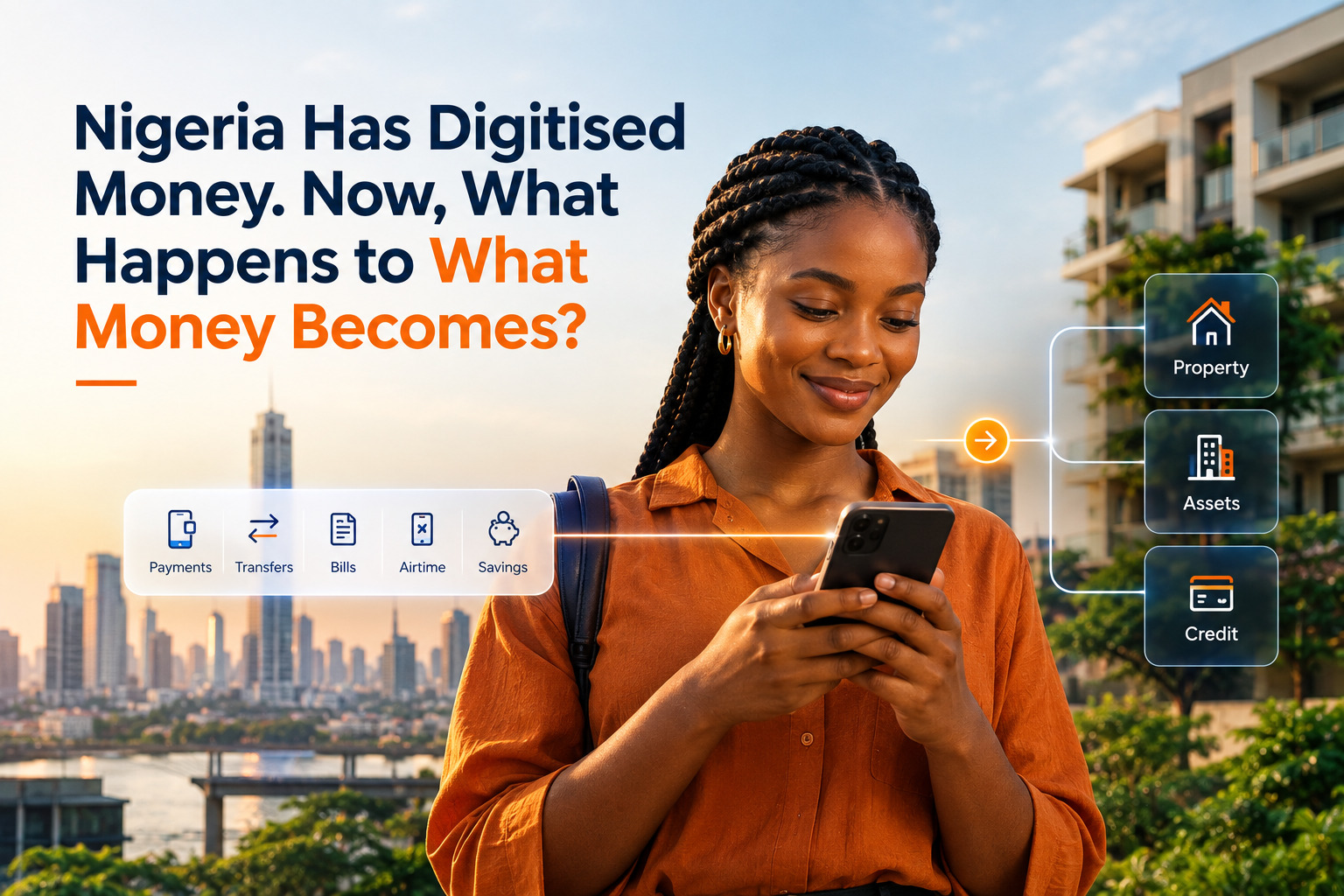
 Nigeria Has Digitised Money. Now, What Happens to What Money Becomes?
Nigeria has built powerful digital rails for moving money, with fintech apps now reaching most smartphone users. The next opportunity is connecting those financial rails to what people own: property, assets and eventually access to credit.