Nigeria Has Digitised Money. Now, What Happens to What Money Becomes?
Nigeria has built powerful digital rails for moving money, with fintech apps now reaching most smartphone users. The next opportunity is connecting those financial rails to what people own: property, assets and eventually access to credit.
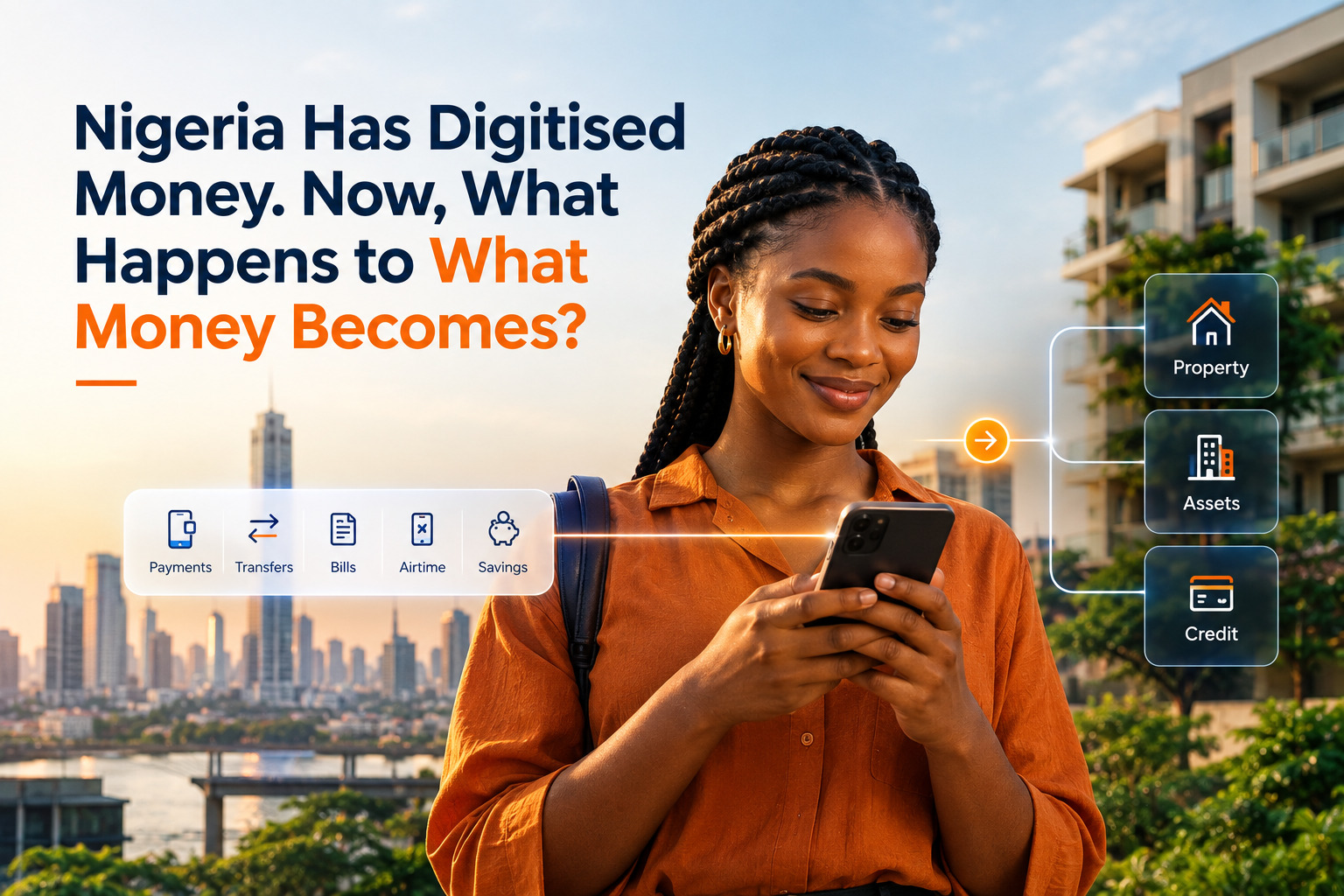
There is something important happening quietly in Nigeria.
We have become very comfortable with money on our phones.
According to the 2025 Nigeria Smartphone Study by KPMG and Orange Group, banking and fintech applications were present on 88% of the smartphones surveyed. The study covered 13,251 respondents across 12 major Nigerian cities.
Think about what that means.
For millions of Nigerians, the phone is no longer just a device for communication.
It is becoming the place where money moves.
You transfer money from your phone.
You receive payments.
You pay bills.
You buy airtime.
You manage accounts.
You interact with financial services without walking into a bank.
Nigeria has spent years building this new financial behaviour, and it is working.
But perhaps the most interesting question is not what Nigerians can now do with money.
It is what Nigerians can now do with what money becomes.
The first phase was moving money
Nigeria's fintech story has largely been about making financial transactions easier.
The results are significant.
The KPMG and Orange Group study reported that the value of digital payments in Nigeria increased from ₦587.5 trillion in 2020 to ₦1.26 quadrillion in 2024, while transaction volume rose from 10.42 billion to 17.67 billion transactions over the same period.
The smartphone became the interface.
The fintech became the service layer.
The payment infrastructure became the rail.
And suddenly, financial activity that once required a branch, paperwork or cash could happen from a screen.
This was a major transformation.
But every infrastructure eventually creates the possibility for the next layer to be built on top of it.
That is where things become interesting.
Money moving is not the end of the journey
Imagine someone receives their salary.
They transfer money.
They pay a bill.
They save some.
They spend some.
But eventually, the question becomes:
What is this money building?
Is it helping them acquire an asset?
Is their ownership recorded properly?
Can the value they have accumulated be understood by a financial institution?
Can that ownership eventually support access to credit?
Can a real estate company manage thousands of customers and their ownership records digitally?
Can financial institutions connect their customers' financial lives to the productive assets they own?
These are different questions from payments.
And they require a different layer of infrastructure.
Africa's next financial infrastructure opportunity
The first wave of fintech helped make money more mobile.
The next wave can make ownership more connected.
Consider real estate.
A developer can have hundreds or thousands of customers making payments over time.
A customer can make those payments through digital channels.
But payment alone does not tell the complete ownership story.
There must also be structured records of what the customer owns, how that ownership was established, what asset it relates to, what transactions have occurred, and what can legitimately happen with that ownership.
This is where financial infrastructure and asset infrastructure begin to meet.
The opportunity is not simply to create another app.
It is to create the systems that allow money, ownership and credit to communicate with one another.
The smartphone has already become the doorway
There is another important signal in the study.
Smartphone penetration among respondents increased from 64% in 2023 to 75% in 2025. Android accounted for 88% of smartphones in the study, while iOS accounted for 13%.
That matters because infrastructure does not always need to begin with a new behaviour.
Sometimes the behaviour already exists.
The device is already in people's hands.
The financial app is already on the phone.
The customer is already making digital payments.
The missing layer is the connection between those financial activities and the economic things people are building.
This is why the next generation of African financial infrastructure will not only be about payments.
It will increasingly be about what payments make possible.
From transactions to economic ownership
At AtomAfrica, we think about this as the infrastructure connecting financial institutions to what people own.
Banks have customers.
Real estate companies have assets and customers.
People make payments.
But these systems have historically operated in separate worlds.
The bank sees the financial relationship.
The asset business sees the property relationship.
The customer experiences both.
The infrastructure connecting these relationships is still developing.
AtomAfrica is building toward that connection.
Through infrastructure such as AtomBank, AtomOwn and AtomCredit, the goal is to connect financial institutions, asset businesses and ownership networks so that financial activity can become more closely connected to real‑world assets and, where appropriate, credit.
The next financial revolution may not look like the last one
The last major fintech transformation asked:
How do we move money faster, cheaper and more conveniently?
The next one may ask:
How do we connect money to the things people own?
That is a much bigger question.
Because ownership is where financial activity starts becoming tangible.
Land.
Property.
Businesses.
Equipment.
Other productive assets.
These are the things that exist beyond the transaction itself.
And when ownership becomes properly structured, verifiable and digitally connected, it creates possibilities for both asset businesses and financial institutions.
For banks, it can create better visibility into eligible ownership and potential secured‑credit relationships.
For asset businesses, it can create better ways to manage customers and ownership at scale.
For customers, it can make ownership easier to track, manage and potentially use within the financial system.
Nigeria has already shown us what happens when infrastructure meets behaviour
The rapid adoption of fintech did not happen simply because Nigerians suddenly became interested in technology.
It happened because the technology solved a real problem.
People wanted to move money.
They wanted convenience.
They wanted access.
The infrastructure met the behaviour.
Now there is another behaviour waiting to be better supported:
people want to own.
They want to build assets.
They want to preserve value.
They want to access opportunities that were previously difficult to reach.
And financial institutions need better ways to understand the economic activity happening around those assets.
The opportunity is therefore not to replace what Nigeria has already built.
It is to build the next layer on top of it.
Nigeria has built powerful rails for moving money.
Now we need the infrastructure for what that money becomes.
That is where the next chapter begins.
More on Economic Ownership
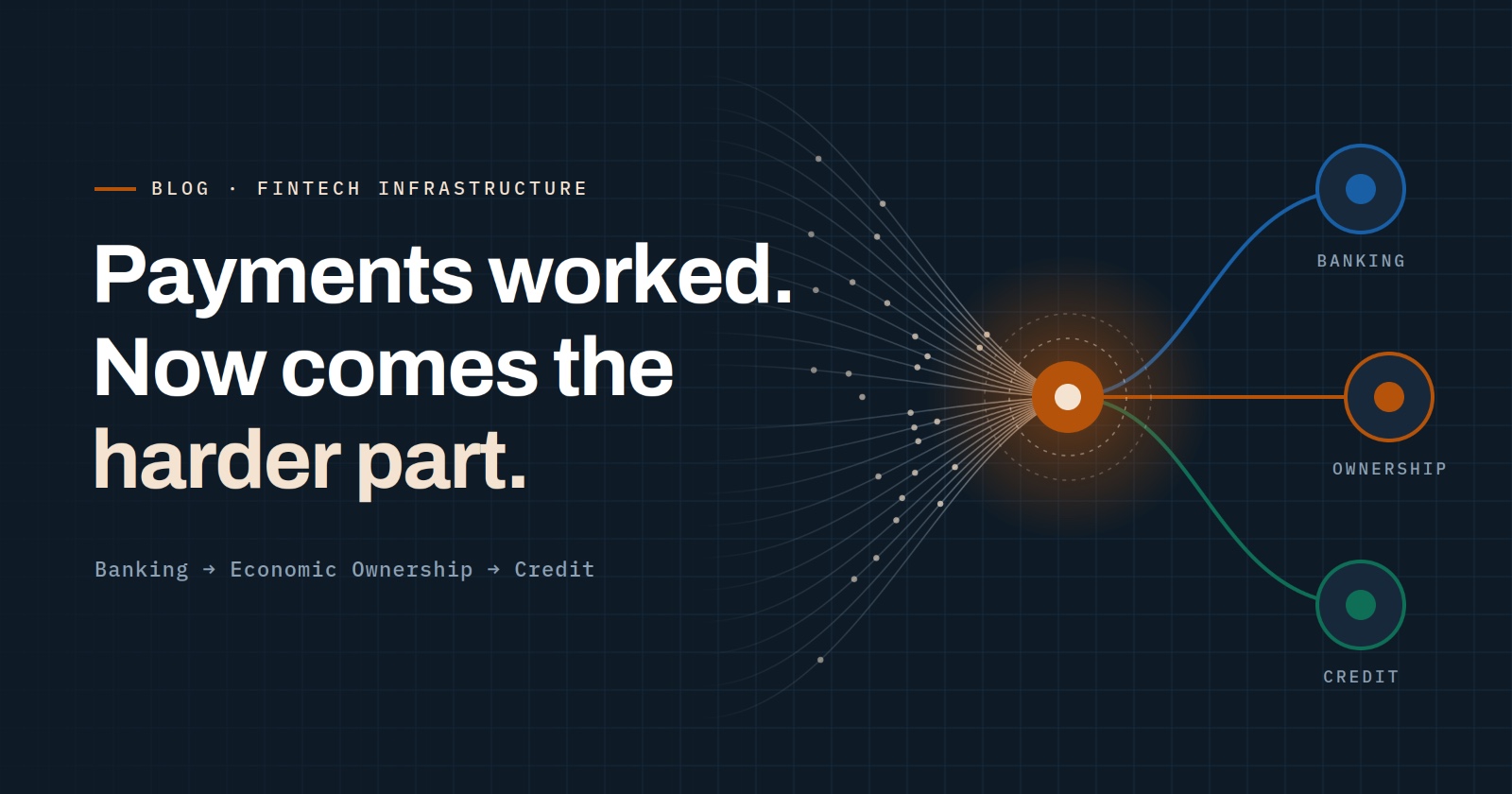 Economic Ownership
 Payments Worked. Now What? Fintech as Economic Infrastructure | AtomAfrica
AtomAfrica founder Oladipupo Muideen Olaide on why Nigerian fintech must move beyond payments, and what it takes to turn transactions into ownership and credit.
 Economic Ownership
 Diaspora Property Ownership Nigeria 2026: How Nigerians Abroad Can Own Property Back Home
For Nigerians abroad, owning property back home doesn't always have to start with millions. Explore practical routes to diaspora property ownership in Nigeria in 2026, including mortgages, payment plans, joint ownership and progressive property ownership.
Economic Ownership How Nigerians Abroad Can Own Property in Nigeria by Paying Small Small
Living in the UK, USA, Canada or elsewhere doesn't mean you have to wait until you have millions before owning property back home. From diaspora mortgages and group ownership to progressive property ownership, here are practical ways Nigerians abroad can start building property ownership in Nigeria, even by paying gradually.