Unlocking African Real Estate: How Asset‑Backed Credit Creates Wealth
Real estate is Africa’s ultimate currency, yet its wealth remains trapped in paperwork. Explore how fixing the financial plumbing unlocks asset-backed credit for all.
If you ask the average person where wealth lives, they’ll point to a bank balance, a high‑yield savings account, or maybe a flashy stock portfolio.
In Africa, that script gets completely flipped.
Walk through any vibrant neighborhood in Lagos, Nairobi, or Accra, and you’ll realize something profound: the real wealth isn't sitting quietly in a bank vault. It’s sitting in mortar, bricks, and red‑clay soil. It’s the half‑completed duplex in an up‑and‑coming suburb, the family plot of land passed down through generations, and the commercial strip under development.
Property is the ultimate African currency. It is the dream we all chase, the retirement plan we build with our bare hands, and the legacy we hope to leave behind.
Yet, there is a massive, quiet tragedy hiding in plain sight.
The Curse of "Dead Capital"
For decades, millions of Africans have been sitting on trillions of dollars worth of real estate that is practically invisible to the formal financial system.
Economists call it dead capital.
Imagine owning a piece of land worth ₦30 million ($20,000+). You know it’s valuable. Everyone knows it’s valuable. But because your purchase, installment payments, and ownership history live in a dusty paper file at a developer’s office, a WhatsApp chat history, or a chaotic spreadsheet, the formal banking system can’t see it.
To a bank, that land doesn't exist. You can't use it as collateral to get a business loan, fund your child's education, or seize an urgent investment opportunity. Your wealth is trapped—locked away in concrete and dirt, unable to work for you.
Why does this happen? Because for a very long time, the financial plumbing connecting African real estate to modern banking has been completely broken.
Fixing the Plumbing: How We Unlock the Continent’s Wealth
Building wealth isn't just about constructing more houses or launching more savings apps. It’s about building the invisible infrastructure that makes trust seamless, transparent, and digital.
Think of it like water in a city. You can have a massive reservoir of clean water (millions of people wanting to buy property and build assets), but if the pipes are rusted, leaking, and disconnected, nobody gets a drink.
At AtomAfrica, we aren't trying to sell you another property or launch another flashy consumer app. We are fixing the pipes. We are building the financial plumbing of African wealth creation.
Here is what that actually looks like on the ground:
- For the Everyday Dreamer: Through ecosystems like NairaPacket, buying land or housing units shouldn’t feel like navigating a minefield of scams and opaque paperwork. It means buying verified assets in safe, affordable micro‑installments, where every single kobo you pay is tracked transparently.
- For the Property Developers & Cooperatives: Instead of tracking thousands of fractional buyers in messy spreadsheets that invite human error and disputes, developers use AtomOwn—a rock‑solid, tamper‑proof ownership ledger backed by independent lawyers, surveyors, and valuers.
- For the Local Banks & MFBs: When every installment payment is recorded cleanly and verified on a digital ledger, that property stops being "dead capital." Through AtomCredit, partner banks can finally look at a customer's disciplined payment history and say: "Yes, we see your asset. Here is the loan to grow your business."
From Invisible Assets to Generational Wealth
When you fix the plumbing, everything changes.
When land titles become trustworthy, when micro‑installments are backed by transparent ledgers, and when local banks can safely lend against everyday property ownership, the entire economic engine shifts into a higher gear.
The everyday earner stops feeling like they are gambling their savings on a plot of land. The local microfinance bank gets the reliable data it needs to lend with confidence. And Africa’s massive pool of real estate finally steps out of the shadows and into the modern financial economy.
Real wealth creation in Africa isn't going to happen by accident. It's going to happen when the infrastructure catches up with the ambition of its people.
And that infrastructure is finally being built.
More on Asset-Linked Credit
Asset-Linked Credit From Dead Capital to Working Credit: How Ownership Infrastructure Powers African Prosperity
Owning land is only half the battle. Meet the infrastructure shift that lets everyday Africans turn property into active financial power.
Asset-Linked Credit Can You Use Land or Property as Collateral for a Loan in Nigeria?
Land is the most valuable thing many Nigerians own, but using it to get a loan isn’t always simple. Here’s how property collateral works in Nigeria, which documents banks look for, and how even partial ownership can help you access credit.
 Asset-Linked Credit
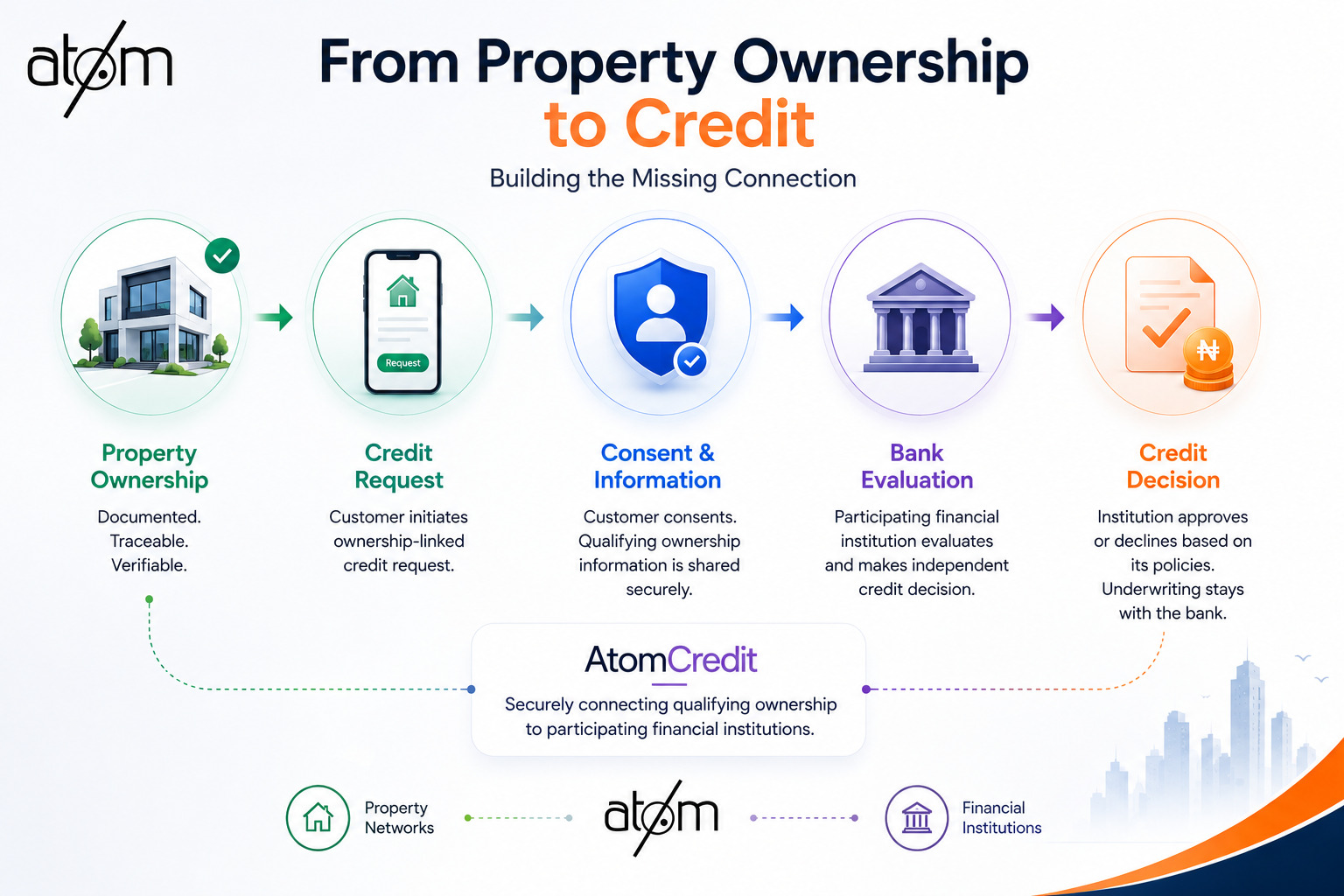
From Property Ownership to Credit: Building the Missing Connection
People can own valuable property while that ownership remains largely disconnected from the financial institutions serving them. AtomCredit is building the infrastructure for qualifying ownership information to move securely from property networks to participating financial institutions for independent credit evaluation.