Can You Use Land or Property as Collateral for a Loan in Nigeria?
Land is the most valuable thing many Nigerians own, but using it to get a loan isn’t always simple. Here’s how property collateral works in Nigeria, which documents banks look for, and how even partial ownership can help you access credit.

Short answer: yes. Land and buildings are some of the most widely accepted forms of collateral in Nigeria. Banks like them because property holds value and doesn’t disappear.
The longer answer is that owning land and being able to borrow against it are two different things. Plenty of Nigerians own property a bank won’t accept, usually because of missing or incomplete documents.
Here’s how it works, what banks look for, and what your options are if your ownership isn’t complete yet.
How a property‑backed loan works
When you use property as collateral, you give the lender a legal right over it until the loan is repaid. If you repay in full, that right is released. If you default, the lender can take steps to recover its money from the property.
In Nigeria this is usually done in one of two ways:
- Legal mortgage. The lender’s interest is formally registered against the property. It gives the bank stronger protection, so it’s what most banks prefer for larger loans.
- Equitable mortgage. You deposit your title documents with the lender as security, often with a written agreement. It’s quicker to set up but gives the lender less protection, so banks may lend less against it.
Either way, the bank will only lend a portion of what the property is worth, not the full value. That gap protects the lender if prices fall or recovery takes time.
Which documents banks look for
This is where most applications succeed or fail. Banks want proof that you own the property, that it’s genuine and that nobody else has a claim on it. The documents they commonly ask for include:
- Certificate of Occupancy (C of O). Issued by the state government, this is one of the strongest forms of title in Nigeria.
- Governor’s Consent. Under the Land Use Act, transferring or mortgaging land generally requires the consent of the state governor. If you bought land from someone who held a C of O, the Governor’s Consent records your ownership.
- Registered Deed of Assignment. The document that transfers ownership from seller to buyer. Registration at the state land registry strengthens it considerably.
- Survey plan. Confirms the exact location and boundaries of the land.
- Search report. A lawyer’s search at the land registry confirming the title is genuine and free of existing charges.
- Valuation report. An estate surveyor and valuer’s estimate of what the property is worth.
If your land only has a receipt, an unregistered agreement or a family document, many banks will hesitate. That doesn’t mean the land has no value. It means the bank can’t easily rely on it.
This is general information, not legal advice. Requirements differ between states and lenders, so always speak with a lawyer before pledging property.
Common reasons banks reject property collateral
- The title is incomplete or unregistered
- The land is under dispute or family ownership isn’t settled
- The property is already pledged to another lender
- The location makes it hard to value or resell
- The documents don’t match the actual plot
Most of these come back to one thing: verification. When a lender can’t confirm what it’s being offered, it says no.
What if you’re still paying for the property?
This is the situation millions of Nigerians are in. You’re buying land in instalments, you’ve paid a good part of it, but you don’t have a full title in your name yet. Can that ownership help you get credit?
With traditional banks, usually not. A half‑paid instalment plan sitting in a developer’s records isn’t something most lenders can work with.
That’s starting to change. When partial ownership is properly recorded, with the property verified, the payments logged and the stake clearly assigned to you, it becomes something lenders can actually assess.
How recorded ownership opens up credit
On NairaPacket, which runs on AtomAfrica infrastructure, customers buy property in small units called Packets, starting from ₦10,000. Every payment is recorded on their ownership ledger, and each listed property is backed by title documents, a lawyer’s verification letter, a non‑encumbrance undertaking and the allocation agreements behind it.
Because that ownership is verified and recorded, owners can:
- Request credit from participating lenders using their recorded stake, through AtomCredit
- Borrow from family and friends with their stake recorded as collateral, so everyone knows what’s at stake
- Get help completing a purchase, where a participating bank can finance part of the property with the customer repaying the bank over time
In every case, the lender makes its own decision. Recorded ownership doesn’t guarantee a loan. What it does is give you something real and verifiable to bring to the table, which is more than most Nigerians have had until now.
Tips before you pledge any property
- Get your documents in order first. Register your Deed of Assignment and get Governor’s Consent where needed.
- Do a fresh search. Make sure there are no old charges or disputes on the land.
- Borrow only what you can repay. The property is at risk if you default.
- Read the loan terms carefully. Check the interest rate, fees, tenure and what happens if you miss a payment.
- Use a lawyer. Especially for a legal mortgage, professional advice is worth it.
The bottom line
Property is one of the best routes to credit in Nigeria, but only when the ownership is clear and verifiable. The more of your ownership that’s properly recorded, the stronger your position with any lender.
That’s the gap AtomAfrica was built to close: connecting banking, property ownership and credit so the assets Nigerians are already building can work for them.
Building ownership and want access to credit later? Start with verified property on NairaPacket. Lenders and banks interested in ownership‑backed credit can reach the AtomAfrica team at atomafrica.tech.
More on Asset-Linked Credit
 Asset-Linked Credit
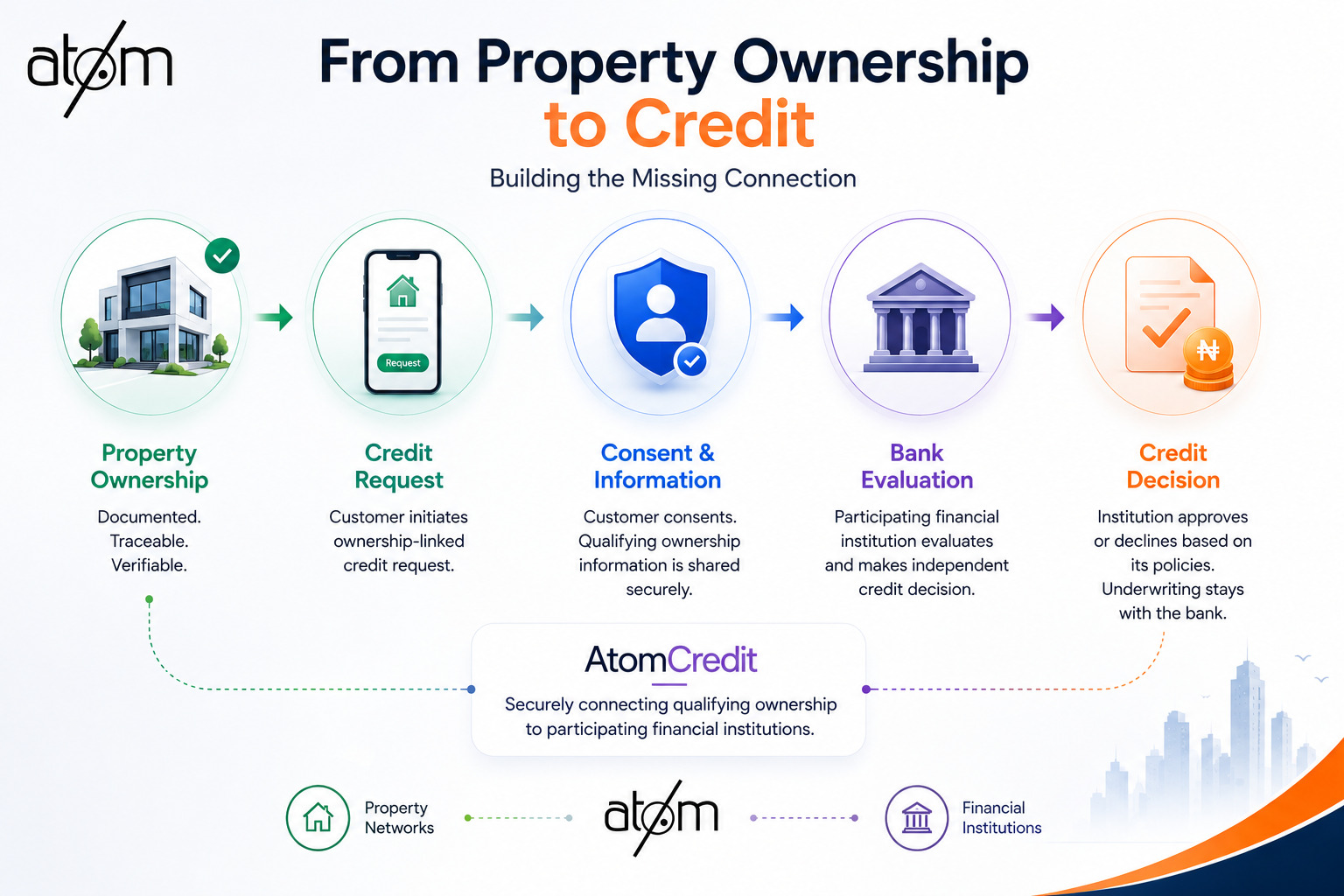
From Property Ownership to Credit: Building the Missing Connection
People can own valuable property while that ownership remains largely disconnected from the financial institutions serving them. AtomCredit is building the infrastructure for qualifying ownership information to move securely from property networks to participating financial institutions for independent credit evaluation.
 Asset-Linked Credit
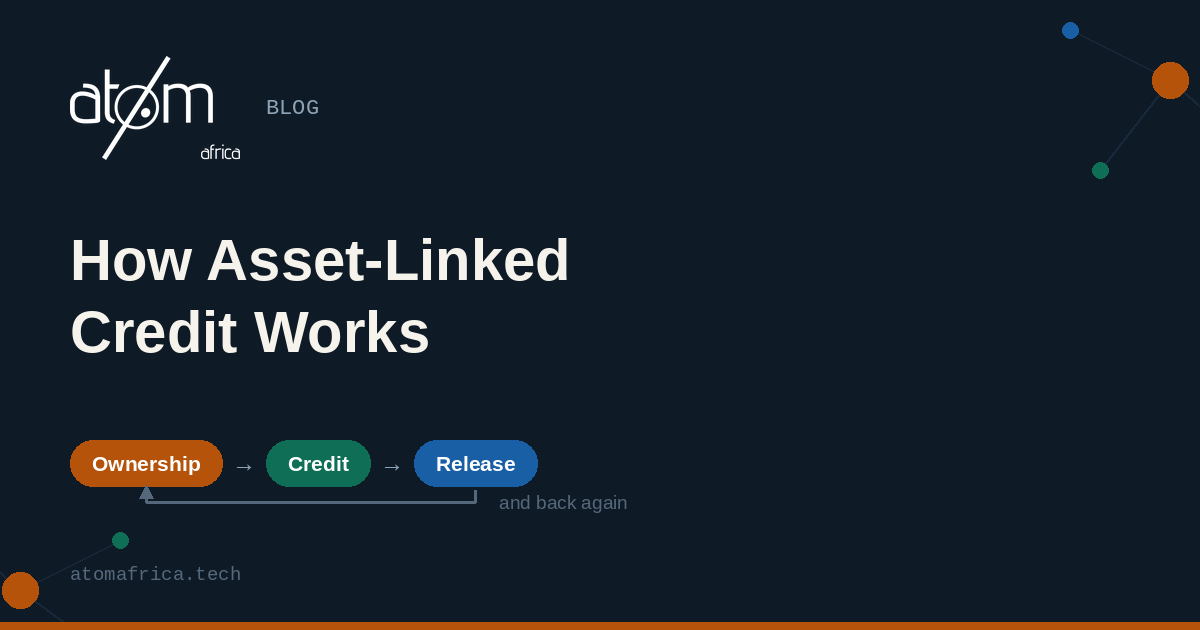
How Asset-Linked Credit Works
Millions of Africans own real assets the financial system cannot see. This is how verified ownership becomes credit: the seven-stage loop from ownership record to encumbrance to release, who decides what along the way, and proof that the model already works.