We Know How Much Money We Have. But Do We Know What We Own?
Africa has digitized how money moves, but much of what people own remains fragmented across documents, developers and disconnected systems. Discover why making ownership visible, traceable and connectable to finance could be the next major opportunity for financial infrastructure.
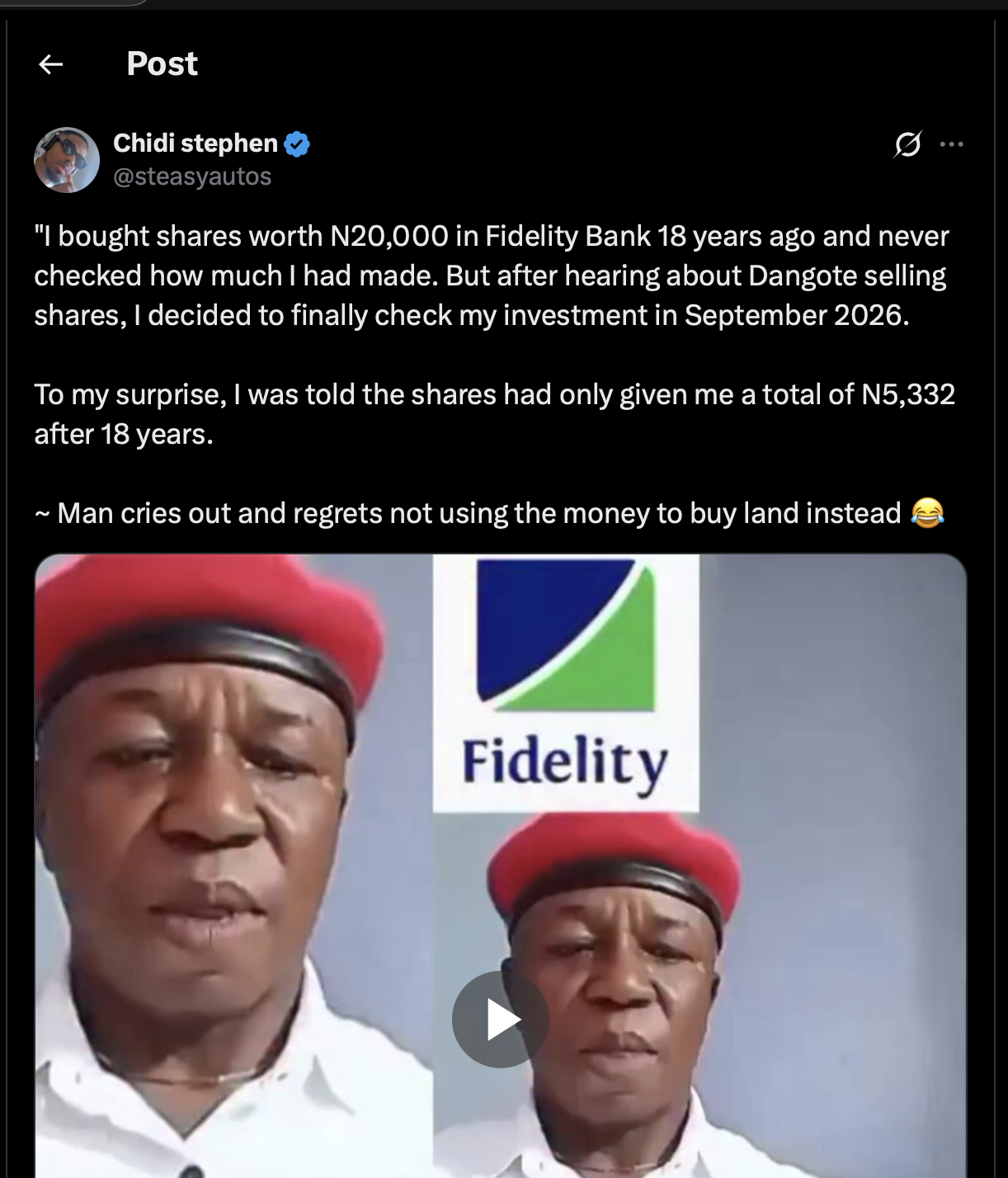
A post making the rounds on social media recently caught my attention.
Someone claimed he bought ₦20,000 worth of shares in a Nigerian bank about 18 years ago and only recently checked what had happened to them.
The internet, as usual, turned it into a joke.
The punchline was simple: “Imagine if he had bought land instead.”
But I think there is a more important question hiding inside the story.
What happens when you own something for years, but you barely interact with that ownership?
Because this is not only about shares.
It is about how we think about ownership in Africa.
We have become very good at seeing our money
Think about your bank account today.
You open your phone and immediately see your balance.
You can see money that came in yesterday.
You can see a transfer you made three years ago.
You can download your statement.
You receive an alert when money moves.
Your financial activity has become visible.
Now ask yourself a different question:
What exactly do I own?
That answer is often much harder to get.
You may own land, but the documents may be somewhere in a file.
You may have been paying for a property for years, but still need to search through receipts or WhatsApp messages to calculate how much you have paid.
You may own something valuable, but there may not be a simple place where you can see your ownership history, supporting documents and what you can actually do with it.
We digitized the movement of money.
Ownership has not received the same attention.
Buying is not the end of ownership
This is something we often get wrong.
We treat buying an asset as the end of the journey.
You pay.
You receive a receipt.
You collect your documents.
Done.
But ownership doesn't end there.
It continues long after the transaction.
You may want to know:
How much do I own?
How much have I paid?
What documents support my ownership?
What has happened to my ownership over time?
Can I transfer it?
Can I pass it to my family?
Can I list eligible ownership for sale?
And if I need financing, can a financial institution understand and evaluate what I own?
These are ownership questions.
And answering them should not require digging through old messages, paper files and spreadsheets.
The problem is not that Africans don't own things
We do.
People own land.
People own houses.
People own businesses.
People own shares.
People own vehicles and equipment.
People build assets over many years.
The problem is that the information around that ownership is often fragmented.
A developer may have the customer record.
Another system may contain payment information.
A lawyer may have verification documents.
The physical documents may sit in an office.
The customer may have receipts on their phone.
All these records may describe the same ownership.
But they may not be connected.
That makes ownership difficult to understand, difficult to manage and difficult to connect to the wider financial system.
Imagine if ownership was as easy to see as your bank balance
Imagine you are gradually acquiring a property.
You open your phone and see:
Property: Lighthouse Estate
Ownership: 24 Packets
Payments: ₦1,200,000
Ownership history: Available
Documents: Available
Transfer: Eligible, where applicable
You don't have to calculate everything yourself.
You don't have to search through years of messages.
You don't have to call someone just to know where you stand.
Your ownership has a record.
You can see it.
You can track it.
You can manage it.
That is where technology becomes useful.
Technology does not replace the underlying property, legal documents or professionals responsible for verification.
It connects the information and makes the ownership journey easier to manage.
This is where economic ownership comes in
For many people, traditional property ownership feels like an all‑or‑nothing game.
You have enough money to acquire the property, or you wait until you do.
But Nigerians have always understood gradual ownership in practice.
We save through Ajo.
We contribute through cooperatives.
We pay developers in instalments.
Families contribute together.
Workers save from their salaries.
The behaviour already exists.
What technology can change is the structure around it.
Instead of simply saying, “I am saving towards property,” the person can have a documented ownership journey that shows what they have acquired and how that ownership has progressed.
That is the opportunity behind economic ownership.
It is not about creating digital land or turning property into a token.
It is about having a structured way to record and manage a person's economic or contractual ownership interest in an underlying real‑world asset, supported by the relevant agreements and documentation.
The screen is only the interface.
The real value is the record behind it.
Then comes an even bigger question: Can ownership connect to credit?
This is where the conversation becomes interesting for financial institutions.
Banks already understand money.
They can see deposits, transfers, income and repayment activity.
But what about the assets their customers own outside the bank?
What if qualifying ownership could be properly documented, traceable and verifiable, and then connected to a participating financial institution when the owner requests credit?
That does not mean every property automatically becomes collateral.
It does not mean every owner qualifies for a loan.
And it does not mean AtomAfrica decides who gets credit.
The financial institution still evaluates the customer, the ownership, the risk, valuation, terms and applicable arrangements.
The technology provides the connection.
Ownership → Credit Request → Consent → Underwriting → Financing
That connection becomes much harder when ownership information is scattered across disconnected systems.
The next phase of fintech may be about what people own
Africa's fintech story has largely been about moving money.
Payments.
Transfers.
Collections.
Digital accounts.
That transformation has been important.
But money is rarely the destination.
People move money because they want to do something with it.
Build a business.
Buy property.
Acquire land.
Build a home.
Own an asset.
Create something they can eventually pass on.
So perhaps the next question for financial infrastructure is not only:
How do we move money?
It is also:
What is that money helping people own?
And once they own it, can the financial system understand it?
This is what we are building at AtomAfrica
At AtomAfrica, we are building infrastructure that connects Africa's finance to what people own.
Our model connects three layers:
Banking → Economic Ownership → Credit
AtomBank provides digital banking infrastructure for financial institutions.
AtomOwn gives property businesses their own digital ownership networks where they can manage properties, customers, payments and ownership records under their own brand.
NairaPacket operates as a property ownership and distribution network, helping people build property ownership gradually while providing participating property businesses with an additional distribution channel.
AtomCredit connects qualifying ownership to participating financial institutions for credit evaluation.
Different products.
One infrastructure story.
The question is changing
For a long time, the financial system has asked:
How much money do you have?
We believe another question deserves more attention:
What do you own?
And eventually:
Can the financial system understand what you own?
Because ownership that cannot be clearly recorded is difficult to manage.
Ownership that cannot be verified is difficult to trust.
And ownership that cannot connect to the financial system can remain financially isolated.
Africa has already digitized money.
Now, ownership needs its infrastructure too.
Payments went digital. Ownership got left behind.
AtomAfrica is building the infrastructure connecting Africa's finance to what people own.
More on AtomAfrica News & Insights
 AtomAfrica News & Insights
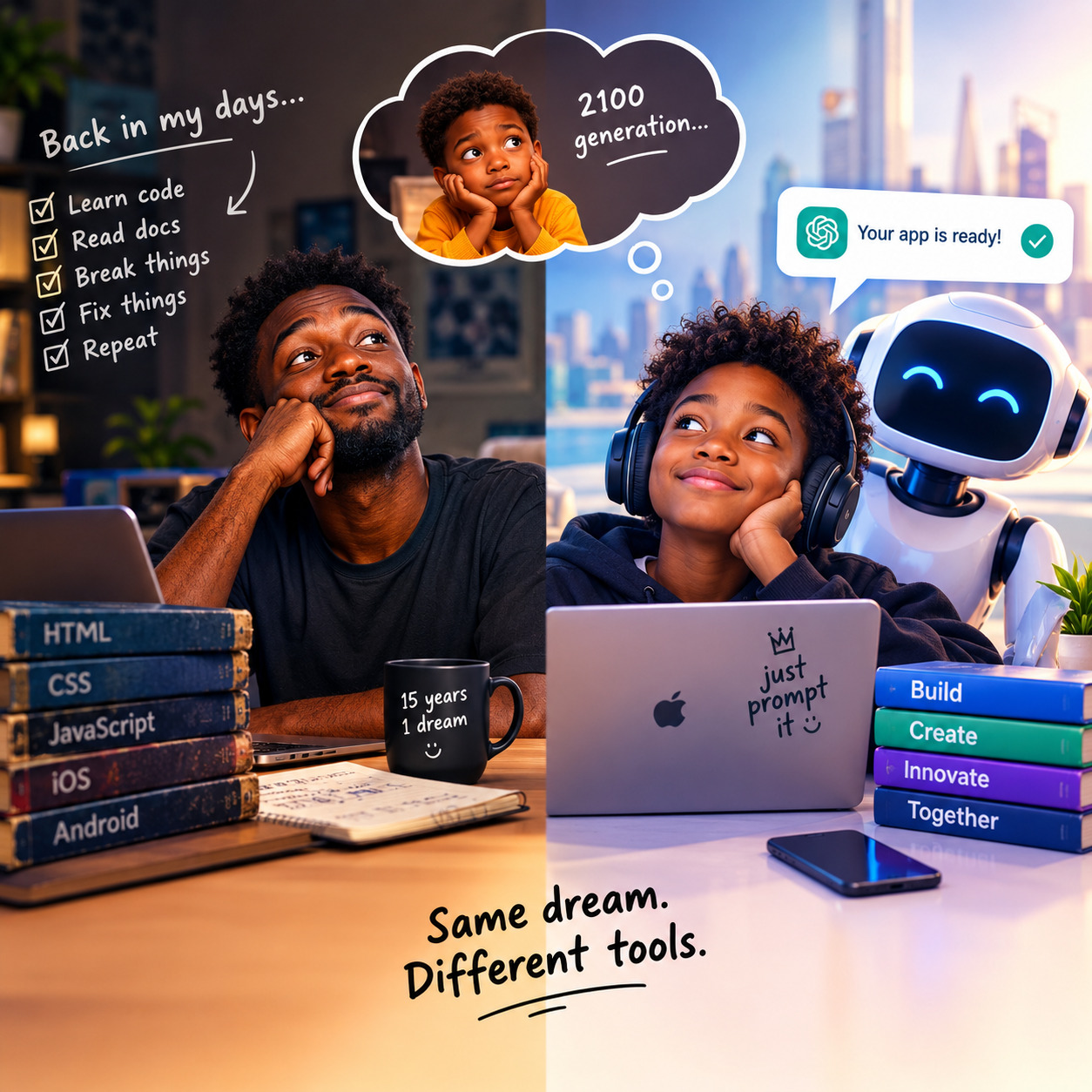
 AI Is Making Us More Capable. But Are We Becoming Less Capable?
AI is making software development faster and more accessible, but as we look toward the 2100 generation, we must ensure convenience does not replace learning, critical thinking and real understanding.
 AtomAfrica News & Insights
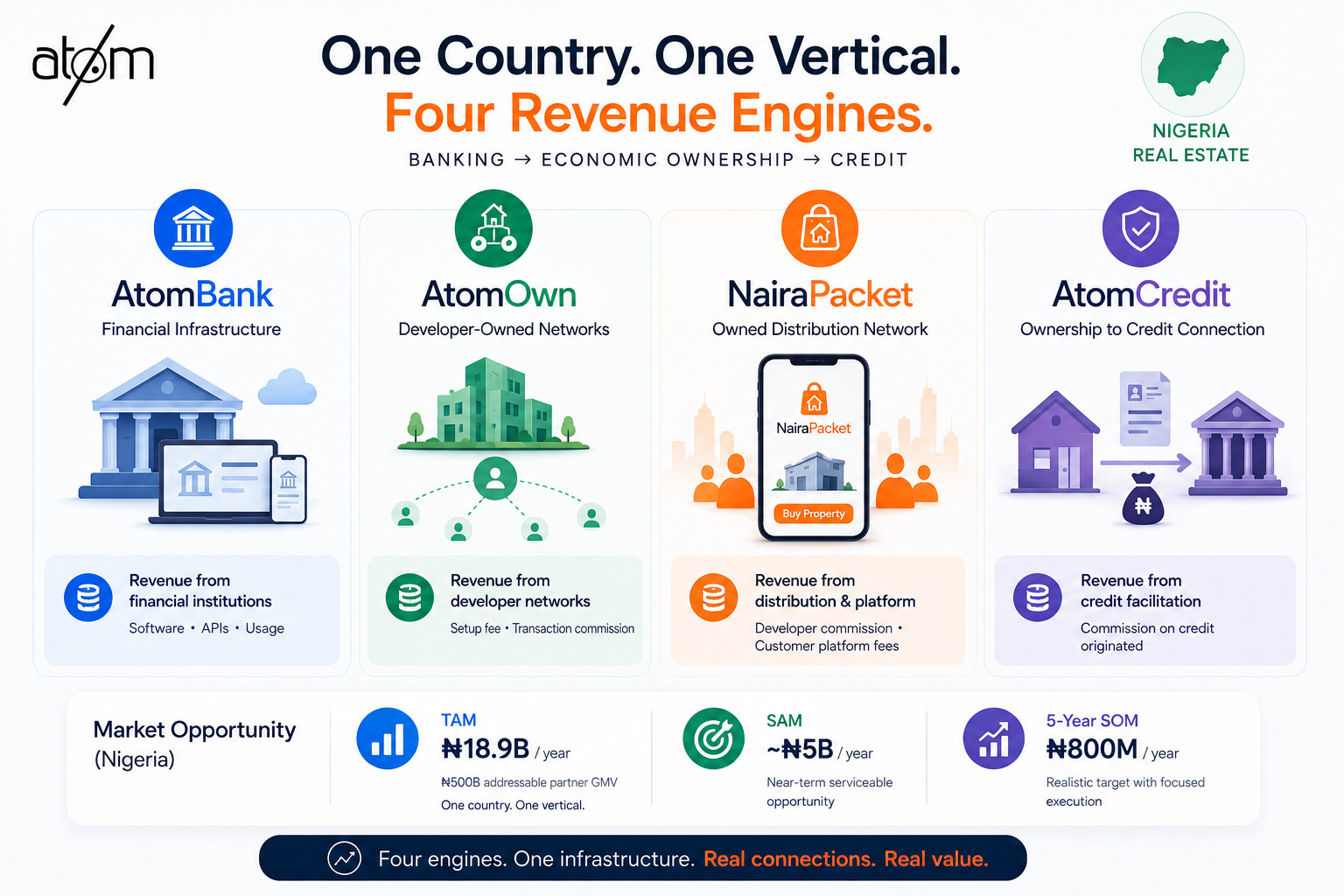
 One Country. One Vertical. Four Revenue Engines: The Market Behind AtomAfrica
AtomAfrica is starting with one country and one ownership vertical: Nigeria and real estate. Yet our bottom-up model points to a ₦18.9 billion annual recurring market opportunity across four connected revenue engines — AtomBank, AtomOwn, NairaPacket and AtomCredit. Here is how we think about the market, what we already know, and what remains to be proven.