Property Ownership Platforms in Nigeria 2026: You Don't Have to Wait Until You Have Millions
For many Nigerians, property ownership has always felt like something that starts when you have millions. But in 2026, property ownership platforms are changing that idea, making it possible to start with what you have and gradually build towards something you can call your own.
Ask the average young Nigerian if they would like to own property and the answer will probably be yes.
Then ask:
“So why haven't you bought one?”
That's where the conversation changes.
“My brother, have you seen the price of land?”
😂
And honestly, they have a point.
For a long time, property ownership in Nigeria has felt like something you do after you have “made it.”
Get a good job.
Build your business.
Save enough money.
Have a few millions sitting somewhere.
Then start looking for land.
The problem is that while you are waiting to have enough money, the property you were saving for may not be waiting for you.
A plot you couldn't afford yesterday may become even more expensive tomorrow.
So in 2026, a different question is becoming important:
What if you don't have to wait until you can afford the whole property before you start owning?
That is where property ownership platforms are beginning to change the conversation.
First, what exactly is a property ownership platform?
Think about what technology has already done to other parts of our lives.
You don't need to visit a bank branch to send ₦20,000 anymore.
You don't need to visit an airline office to book a flight.
You don't need to stand outside a restaurant to order food.
Your phone became the interface.
Property is beginning to move in the same direction.
A property ownership platform uses technology to make finding, buying, documenting and managing property ownership easier.
But there is an important distinction.
Not every property website is a property ownership platform.
Some platforms simply help you find property.
Some help you invest in real estate.
Others help you actually build ownership.
Those are different things.
Imagine you have ₦100,000 today
This is where the difference becomes easier to understand.
Let's say you have ₦100,000 that you don't immediately need.
Traditionally, if the property you want costs ₦5 million, your ₦100,000 doesn't make you a property owner.
You are still saving.
You may tell yourself:
“When I reach ₦5 million, I will buy it.”
Fair enough.
But then life happens.
Car repair.
School fees.
Family emergency.
December.
😂
Suddenly the ₦100,000 becomes ₦37,500.
And the property you were saving towards may have moved from ₦5 million to another price.
You start again.
This is one of the problems flexible property ownership platforms are trying to solve.
Instead of saying:
“Save until you can afford the whole thing.”
The idea becomes:
“Start owning with what you have and build from there.”
That is a very different relationship with property.
What property ownership platforms are available in Nigeria in 2026?
Nigeria's PropTech market now has different companies solving different parts of the property problem.
For example, Keble offers full home and land ownership as well as fractional real‑estate opportunities. Its platform is built around making property ownership and real‑estate participation more accessible.
Then there is NairaPacket, which approaches the problem from another angle.
Instead of waiting until you have enough money for an entire property, NairaPacket lets people start building ownership in verified properties from ₦10,000 and add to that ownership over time.
That distinction is important.
The conversation isn't:
“Where can I invest ₦10,000?”
It is:
“What can I start owning with the ₦10,000 I have?”
₦10,000 sounds small. That's actually the point.
Nobody is pretending ₦10,000 buys you a whole plot of land.
It doesn't.
The idea is that your first ₦10,000 doesn't have to remain merely money you are planning to use for property someday.
It can become the beginning of your ownership.
Think about someone earning ₦150,000 or ₦250,000 monthly.
Buying a ₦5 million property outright may sound impossible.
But putting ₦10,000, ₦20,000 or ₦50,000 towards ownership at different times is a completely different conversation.
You start where you are.
You add when you can.
And you can see what you have built.
On NairaPacket, ownership is recorded digitally against a specific verified property. Users can build their position over time and, depending on eligibility and applicable terms, transfer it, list eligible ownership for sale, pass it to family or use qualifying ownership when requesting credit from participating financial institutions.
That is what makes the model interesting.
Property stops being something you are only saving towards and starts becoming something you are gradually building.
Nigerians already understand this behaviour
This may sound like a new technology idea.
But the behaviour behind it isn't new at all.
We already have:
Ajo.
Esusu.
Cooperatives.
Daily contributions.
Monthly savings.
Workplace contribution schemes.
People have been putting small amounts together to achieve bigger financial goals for generations.
The problem is that most of those systems end with cash.
You contribute ₦20,000.
You collect money.
Then you decide what to do with it.
What happens if some of that same discipline could end with property ownership instead?
NairaPacket has even built a Circle model around this idea.
Friends, families, associations and other groups can contribute together, but instead of the beneficiary simply receiving a cash payout when their turn comes, the corresponding value goes towards that person's property ownership.
The contribution behaviour is familiar.
The destination changes.
From saving together to owning.
But please, don't download any app and start sending money
Technology making property easier doesn't remove the need for common sense.
In fact, it makes due diligence even more important.
Before using any property ownership platform in Nigeria, ask some basic questions.
What exactly am I buying?
Is it land?
A house?
An investment contract?
A fraction?
An economic interest?
These words are not interchangeable.
Ask:
Who owns the underlying property?
What documents support it?
Who is the developer?
How is my ownership recorded?
What happens if I want to exit?
Can I transfer what I own?
What fees am I paying?
And perhaps most importantly:
If this platform disappears tomorrow, what evidence exists that I own anything?
A beautiful app is not property documentation.
That distinction matters.
Don't confuse ownership with guaranteed returns either
Another mistake people make is assuming anything connected to property must automatically make money.
Property prices can rise.
They can also stagnate.
Liquidity can take time.
Location matters.
Documentation matters.
The developer matters.
Demand matters.
So when evaluating a property ownership platform, don't only ask:
“How much can I make?”
First ask:
“What exactly do I own?”
That question will save you from many bad decisions.
The bigger change happening in Nigerian property
For years, technology mostly helped Nigerians search for property.
That was important.
But search was only one part of the problem.
The bigger problems remained:
How do I start if I don't have millions?
How do I build gradually?
How is my ownership recorded?
Can I transfer it?
Can I pass it to my children?
Can what I own become financially useful?
Those questions are pushing Nigerian PropTech beyond property listings and towards property ownership infrastructure.
And that may become one of the more interesting changes in Nigerian real estate over the next few years.
Maybe the problem was never that Nigerians couldn't save
Think about how much you have contributed to Ajo.
How much has passed through your savings account.
How much you have put into different plans over the last five years.
For many people, the problem isn't that money never entered their hands.
The problem is that very little of it became something they still own today.
That is why the idea behind property ownership platforms is worth paying attention to.
Not because everybody suddenly has millions.
Quite the opposite.
Because most people don't.
The technology is trying to make ownership fit the financial reality of ordinary people instead of waiting for ordinary people to somehow fit the traditional structure of property ownership.
Perhaps five years from now, asking someone:
“How much did you save this year?”
won't be the only important question.
We may also ask:
“What did you own with it?”
And for someone who has always believed property ownership begins at ₦5 million, ₦10 million or ₦20 million, that could be a very important shift.
You may not be able to buy the whole property today.
But 2026 is increasingly showing that you may not need to wait for the whole amount before your ownership story begins.
More on Economic Ownership
 Economic Ownership
 From Ajo to Ownership: How to Turn Your Contribution Savings Into Property
Millions of Nigerians contribute to Ajo, Esusu and cooperatives every month, yet very few end up owning anything from it. Here’s how your group savings can turn into real property, without giving up the system you already trust.
Economic Ownership How to Buy Land in Installments in Nigeria (Without Paying All at Once)
Most Nigerians want to own land but can’t pay the full price upfront. Here’s how buying property in installments works, what documents to check before you pay, and how to start owning from as little as ₦10,000.
 Economic Ownership
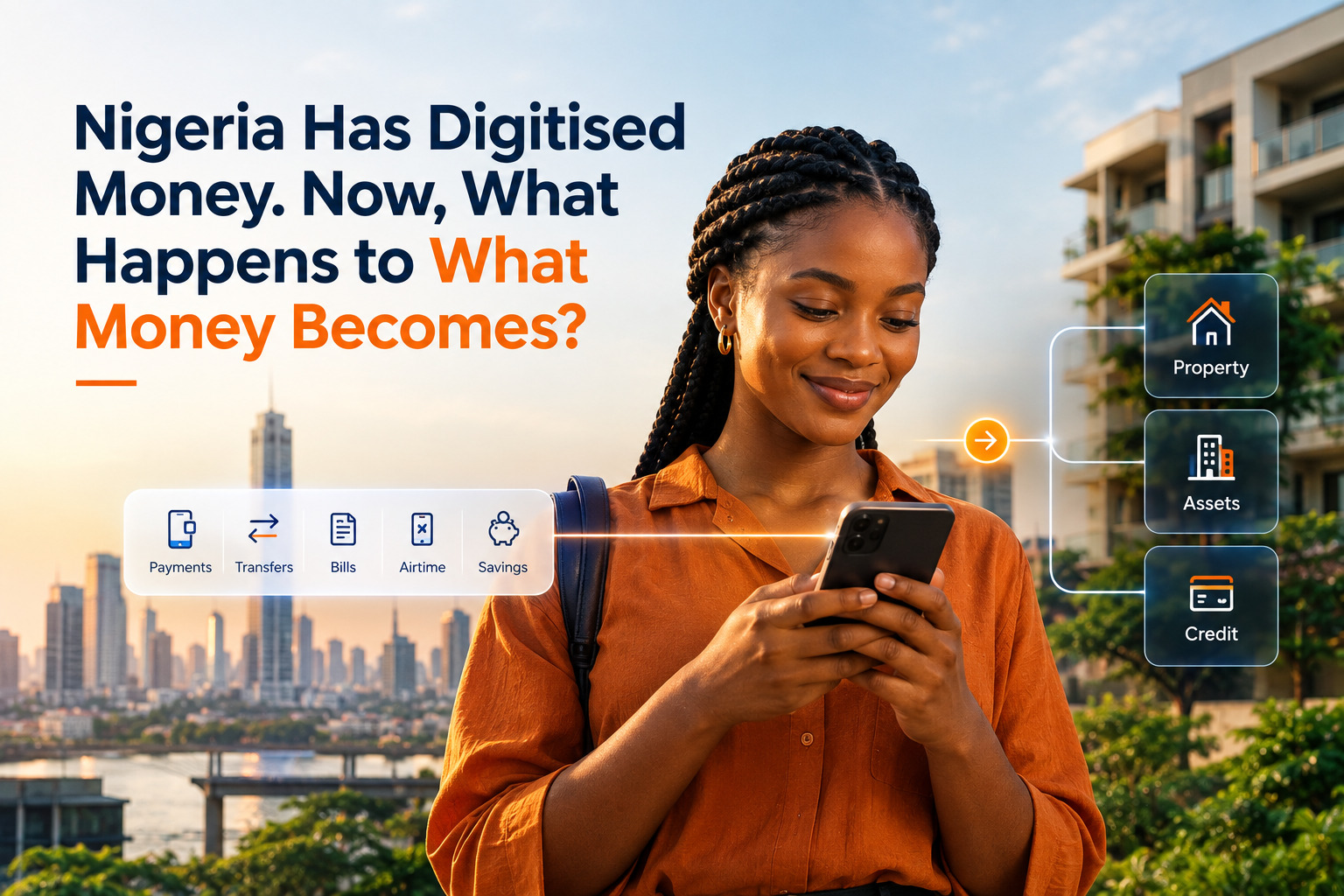
 Nigeria Has Digitised Money. Now, What Happens to What Money Becomes?
Nigeria has built powerful digital rails for moving money, with fintech apps now reaching most smartphone users. The next opportunity is connecting those financial rails to what people own: property, assets and eventually access to credit.